
Design THINKING
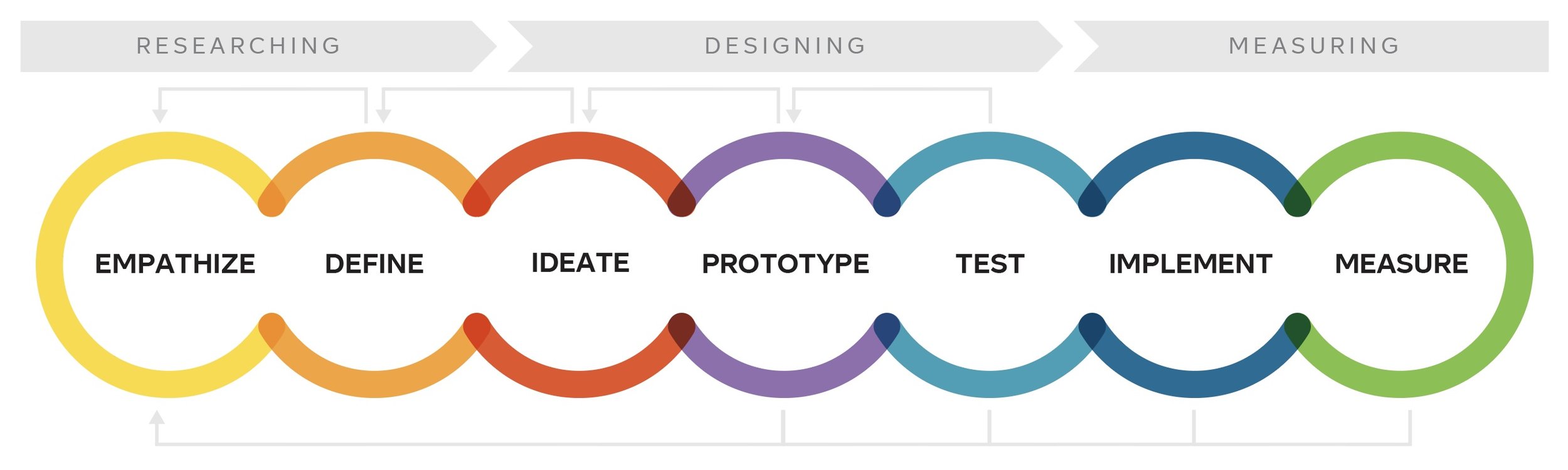
I use Design Thinking as a practical framework for tackling complex, real-world problems. It helps me stay grounded in user needs while moving from research to ideas to tested solutions in fast, iterative cycles. My approach emphasizes empathy, clarity, and continuous learning so solutions are not just thoughtful, but usable, measurable, and shippable.
Design Thinking in Practice
The following examples show how I apply each stage of the Design Thinking process in real product work, across multiple projects. Each section highlights concrete artifacts and outcomes from that phase of the process. Click on any example to view it larger.
Popularized by IDEO and Stanford’s d.school, Design Thinking has evolved into many variations over time. At Boeing and Jeppesen, we extended the core model by adding Implement and Measure to better reflect how ideas are shipped and evaluated in real-world systems.
Empathize
I start by grounding the work in real user context, spending time understanding the people, environments, and systems involved. This includes research, observation, and direct engagement with users in their actual workflows. The goal is to surface underlying needs, constraints, and behaviors that are not always obvious at first glance.
Define
I synthesize research into clear problem statements that align user needs, technical realities, and business goals. This step creates focus and shared understanding across the team before any solutions are proposed. A well-framed problem sets the foundation for everything that follows.
Ideate
I explore multiple solution paths through structured divergence, sketching, and collaborative concepting with cross-functional partners. This creates space for better ideas to emerge before narrowing on a direction. The emphasis is on breadth early, then clarity through iteration.
Prototype
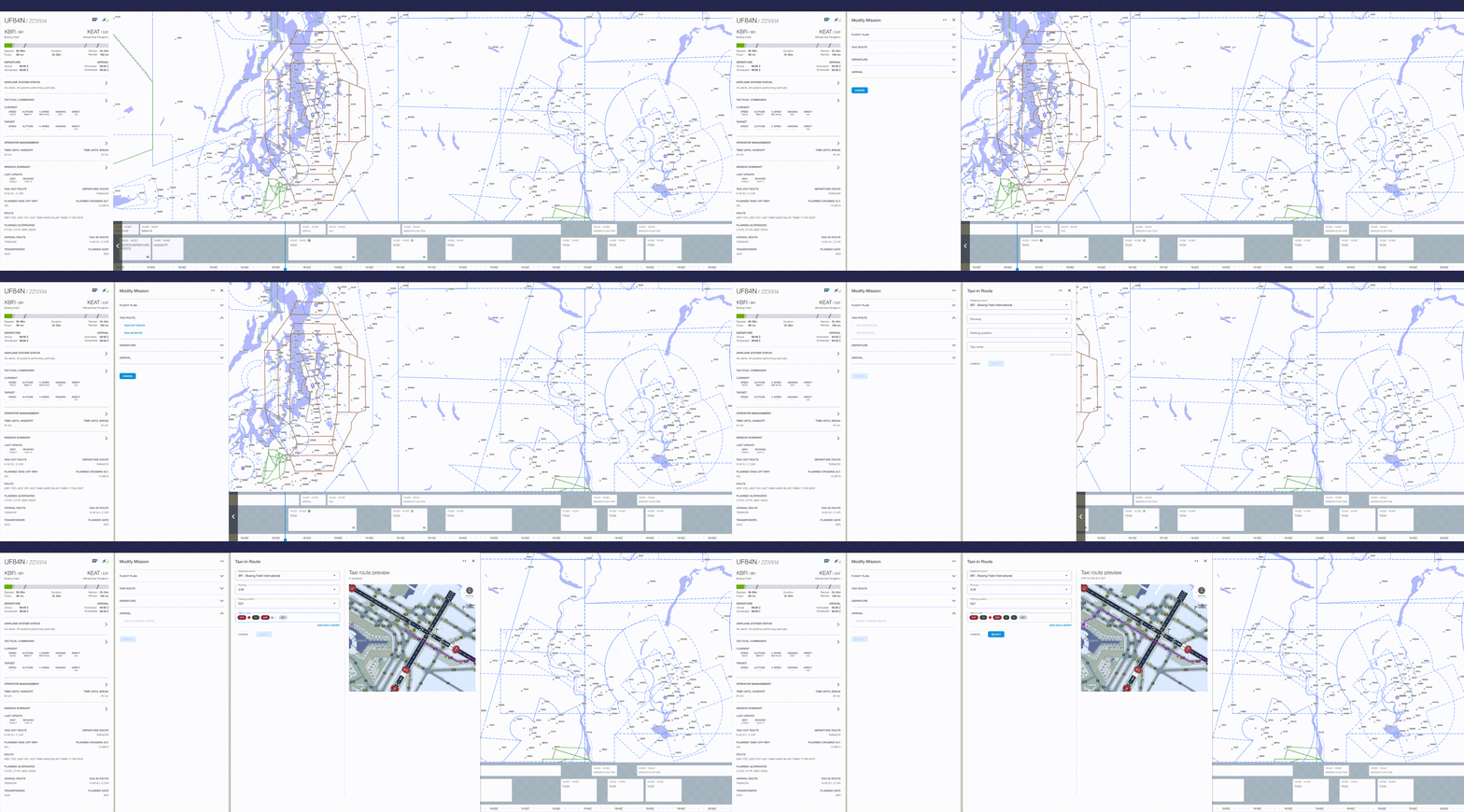
I build lightweight, testable prototypes to make ideas tangible and expose assumptions early. Prototypes act as a shared language between design, product, and engineering, helping teams align quickly. This stage is about learning fast before committing to full implementation.
Test
I validate concepts with real users in realistic scenarios to understand what works, what confuses, and what breaks down. Feedback and observed behavior guide rapid refinement of both flows and details. Testing early reduces risk and increases confidence in the direction.
Implement
I work closely with engineering to translate design intent into shippable product that holds up under real-world constraints. This includes refining interaction details, edge cases, and system behaviors as they meet production realities. The goal is to preserve clarity and usability all the way through delivery.
Measure
I measure outcomes against user and business goals using both qualitative feedback and product data. This helps determine what is working, what needs refinement, and where to invest next. Measurement closes the loop and ensures learning carries forward into future work.