
Cross-Platform Design
I design cross-platform experiences that feel cohesive wherever they’re used. That means building systems that move cleanly between web, mobile, and spatial environments while respecting the strengths and constraints of each. My work focuses on maintaining clarity and continuity so people can pick up a task on any device without friction or relearning.
Examples
The following examples present one design visualized across web, mobile, and spatial platforms. Each shows how shared interactions and structure adapt to different contexts without losing clarity or intent. Click on them to view them larger.
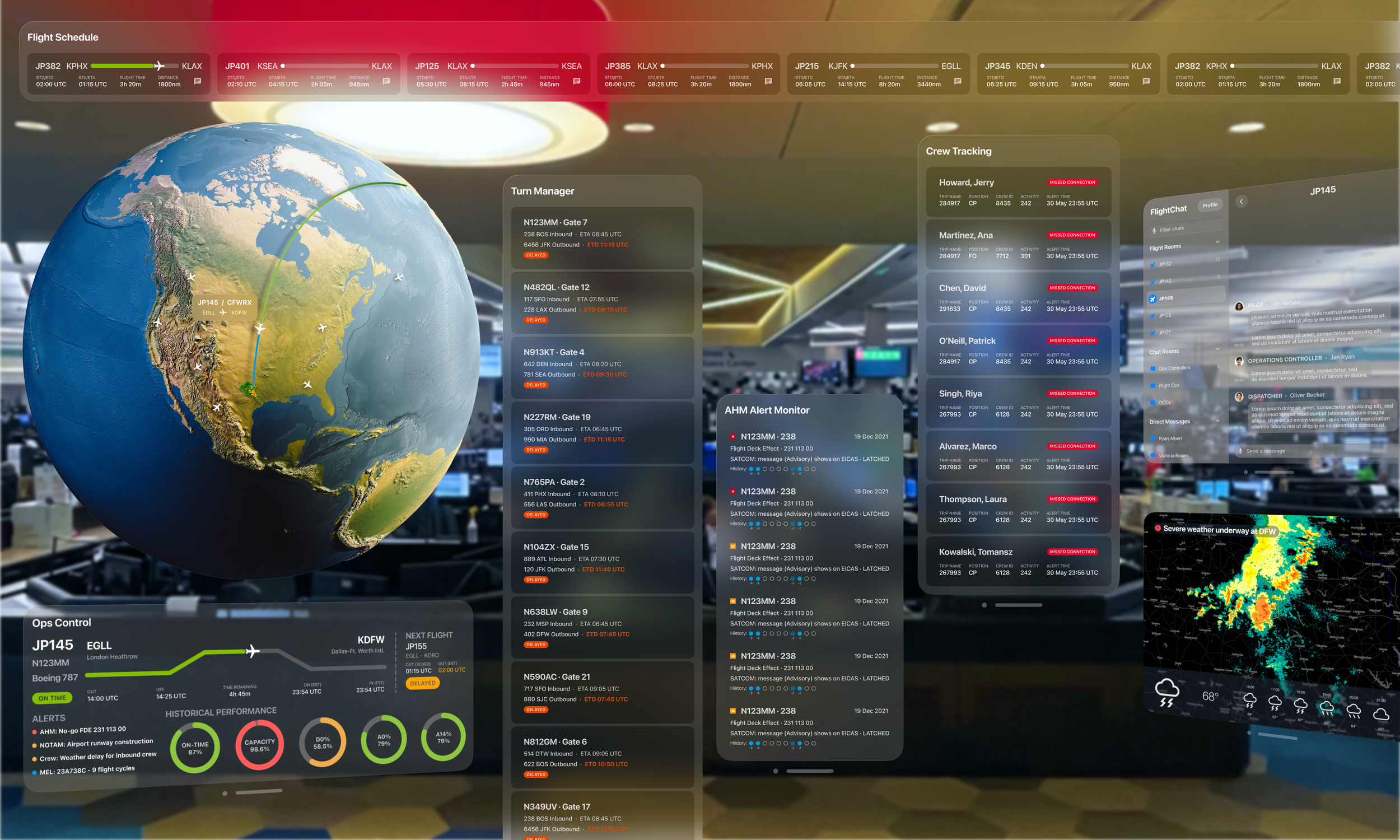
Extending situational awareness into spatial experiences
This Apple Vision Pro version extends the same situational awareness system into a mixed-reality environment. Core operational data (flight status, crew connections, alerts, weather, and network health) are preserved, but arranged spatially to support user-specific layouts, rapid scanning, and flexible focus across a wide operational footprint. Rather than introducing a new paradigm, the design explores how situational awareness can scale into three dimensions while maintaining continuity with the desktop and mobile mental model.
Consolidating 6+ data sources into a single view
This is the primary desktop experience for airline Operations Control Centers, designed first and foremost to support situational awareness for Ops Controllers, Duty Managers, and other stakeholders. The interface brings together flight schedules, crew info, aircraft alerts, weather, and flight tracking into a single pane of glass, reducing fragmentation across tools and screens. This desktop layout establishes the core mental model and information hierarchy used across all platforms.
Optimized designs for any device
The tablet and mobile experiences extend the same situational awareness system beyond the desktop, supporting users wherever they are. Layout, density, and interaction patterns adapt for smaller screens and touch-first use, while preserving the same structure, hierarchy, and operational cues as the desktop experience. This allows users to monitor changes, and view to alerts without losing context as they move between devices.